What Is Pediatric Bone Marrow Transplant in India? A Complete Guide for Parents

Pediatric Bone Marrow Transplant (BMT), also known as Pediatric Hematopoietic Stem Cell Transplant (HSCT), is one of the most advanced and life-saving treatments for children suffering from severe blood disorders, immune deficiencies, bone marrow failure syndromes, and certain cancers. Over the past decade, India has emerged as a global destination for pediatric bone marrow transplantation due to its highly experienced pediatric hematologists, internationally accredited hospitals, advanced transplant facilities, and cost-effective treatment options.
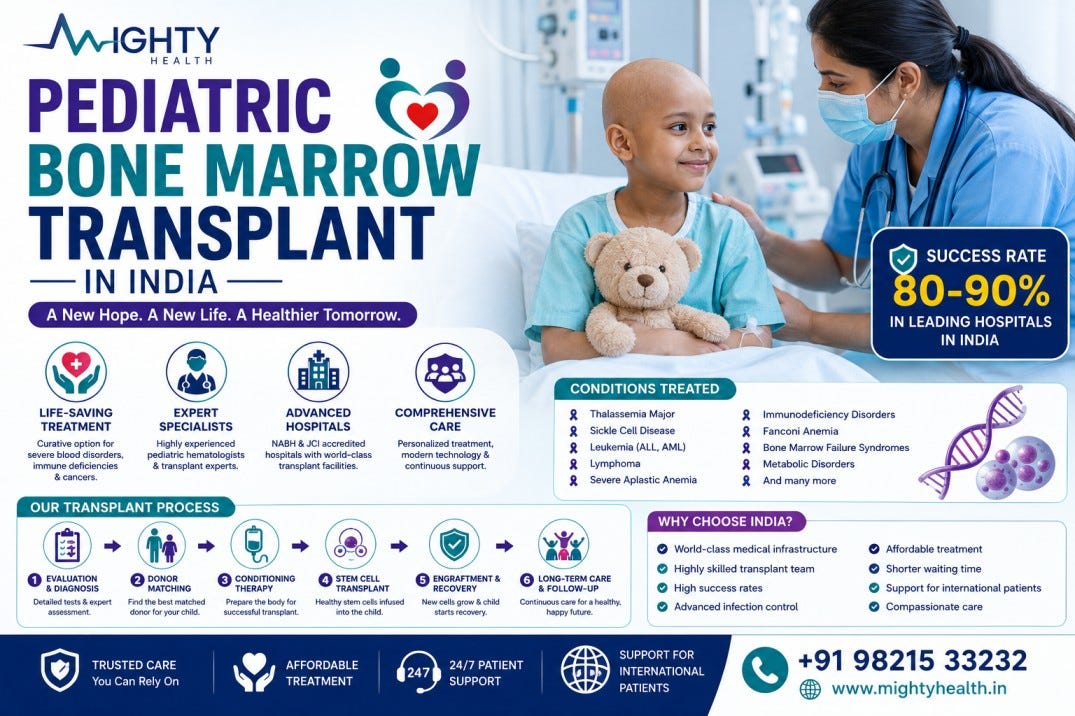
Thousands of children from India and abroad have successfully undergone bone marrow transplantation and returned to healthy, active lives. With modern transplant techniques, improved infection control, and personalized post-transplant care, survival rates have significantly improved.
This comprehensive guide explains everything parents need to know about Pediatric Bone Marrow Transplant in India, including indications, procedure, donor selection, recovery, success rates, costs, and frequently asked questions.
What is Pediatric Bone Marrow Transplant?
A Pediatric Bone Marrow Transplant (BMT) is a medical procedure that replaces damaged or diseased bone marrow with healthy stem cells. Bone marrow is the soft tissue found inside bones that produces red blood cells, white blood cells, and platelets.
When a child’s bone marrow is unable to produce healthy blood cells due to disease or cancer, a transplant can restore normal blood formation and improve immune function.
The procedure uses healthy stem cells obtained from:
- A matched sibling donor
- A matched unrelated donor
- A parent (Haploidentical transplant)
- Umbilical cord blood
- The child’s own stem cells (Autologous transplant)
Why is Pediatric Bone Marrow Transplant Needed?
Doctors recommend bone marrow transplantation when standard treatments such as chemotherapy, medications, or blood transfusions are no longer effective.
Common conditions requiring pediatric BMT include:
Blood Disorders
- Thalassemia Major
- Sickle Cell Disease
- Severe Aplastic Anemia
Blood Cancers
- Acute Lymphoblastic Leukemia (ALL)
- Acute Myeloid Leukemia (AML)
- Chronic Myeloid Leukemia (CML)
- Hodgkin Lymphoma
- Non-Hodgkin Lymphoma
Immune Disorders
- Severe Combined Immunodeficiency (SCID)
- Wiskott-Aldrich Syndrome
- Chronic Granulomatous Disease
Genetic Disorders
- Fanconi Anemia
- Diamond-Blackfan Anemia
- Metabolic Disorders
- Hurler Syndrome
- Adrenoleukodystrophy
Types of Pediatric Bone Marrow Transplant
1. Autologous Bone Marrow Transplant
The child’s own healthy stem cells are collected, stored, and later transplanted after intensive chemotherapy.
Used mainly for:
- Neuroblastoma
- Hodgkin Lymphoma
- Certain solid tumors
2. Allogeneic Bone Marrow Transplant
Healthy stem cells come from another person.
Common donor sources:
- Brother or sister
- Matched unrelated donor
- Parent
- Cord blood donor
This is the most common transplant for pediatric blood disorders.
3. Haploidentical Bone Marrow Transplant
Only half of the donor genes need to match.
Usually:
- Mother
- Father
This option has become increasingly successful due to modern transplant techniques.
Diseases Treated with Pediatric Bone Marrow Transplant
Bone marrow transplantation is highly effective for:
- Leukemia
- Lymphoma
- Multiple Myeloma (rare in children)
- Thalassemia Major
- Sickle Cell Disease
- Fanconi Anemia
- Severe Aplastic Anemia
- SCID
- Neuroblastoma
- Bone Marrow Failure Syndromes
Symptoms That May Require BMT Evaluation
Children may experience:
- Frequent infections
- Persistent fever
- Severe anemia
- Easy bruising
- Bleeding
- Fatigue
- Bone pain
- Delayed growth
- Enlarged spleen
- Swollen lymph nodes
Doctors may recommend transplant evaluation if these symptoms are associated with underlying bone marrow disorders.
Diagnostic Tests Before Transplant
Before transplantation, doctors perform extensive investigations.
These include:
Blood Tests
- CBC
- Blood group
- Liver function
- Kidney function
- Viral screening
Bone Marrow Examination
- Bone marrow aspiration
- Bone marrow biopsy
HLA Typing
To identify the best donor.
Imaging
- Chest X-ray
- CT Scan
- MRI
- PET Scan (when required)
Heart and Lung Evaluation
- ECG
- Echocardiogram
- Pulmonary Function Tests
Donor Selection
Finding the right donor is one of the most important parts of the transplant process.
Possible donors include:
- Matched sibling
- Matched unrelated donor
- Parent
- Cord blood donor
HLA matching reduces complications and improves success.
How is Pediatric Bone Marrow Transplant Performed?
The procedure generally involves several stages.
Step 1: Evaluation
Doctors determine whether the child is fit for transplant.
Step 2: Conditioning Therapy
Chemotherapy, with or without radiation, is given to destroy diseased bone marrow and prepare the body.
Step 3: Stem Cell Collection
Healthy stem cells are collected from the donor or the child (for autologous transplants).
Step 4: Stem Cell Infusion
The stem cells are infused through an intravenous (IV) line, similar to a blood transfusion.
Step 5: Engraftment
The transplanted stem cells travel to the bone marrow and begin producing healthy blood cells. This usually occurs within 2–4 weeks.
Recovery After Bone Marrow Transplant
Recovery is gradual and varies by child.
Typical timeline:
- Hospital stay: 3–6 weeks
- Initial recovery: 2–3 months
- Immune recovery: 6–12 months
- Long-term follow-up: Several years
Children require close monitoring for infections, graft function, and medication adjustments.
Life After Pediatric Bone Marrow Transplant
Most children can eventually return to:
- School
- Sports (as advised)
- Normal eating habits
- Family activities
- Social interactions
Regular follow-up visits remain essential.
Medications After Transplant
Children may receive:
- Immunosuppressants
- Antibiotics
- Antiviral medicines
- Antifungal medicines
- Pain medications
- Nutritional supplements
Parents should ensure medicines are taken exactly as prescribed.
Benefits of Pediatric Bone Marrow Transplant
Major advantages include:
- Potential cure for many blood disorders
- Improved immune function
- Elimination of repeated blood transfusions (in conditions like thalassemia)
- Better quality of life
- Long-term survival
- Improved growth and development
- Reduced hospitalizations
Risks and Complications
Like any major medical procedure, BMT carries risks.
Possible complications include:
- Infections
- Bleeding
- Graft-versus-host disease (GVHD)
- Organ damage
- Graft failure
- Infertility (in some cases)
- Delayed growth
- Secondary cancers (rare)
Experienced transplant teams monitor and manage these complications carefully.
Success Rate of Pediatric Bone Marrow Transplant in India
Success depends on the child’s age, diagnosis, donor match, and overall health.
Approximate outcomes at leading transplant centers:
- Thalassemia Major: 85–95%
- Severe Aplastic Anemia: 80–90%
- Acute Leukemia (selected cases): 70–90%
- SCID and certain immune disorders: Excellent outcomes when performed early
Discuss expected outcomes with the treating transplant team, as results vary between patients.
Cost of Pediatric Bone Marrow Transplant in India
The total cost depends on:
- Hospital
- City
- Type of transplant
- Donor source
- ICU stay
- Medicines
- Laboratory tests
- Hospital stay
- Post-transplant follow-up
India remains one of the most affordable destinations for pediatric bone marrow transplantation while maintaining high standards of care.
Why Choose India for Pediatric Bone Marrow Transplant?
India is recognized globally because of:
- Highly experienced pediatric hematologists
- Advanced transplant units
- NABH & JCI accredited hospitals
- Modern infection control facilities
- Comprehensive pediatric ICU support
- Affordable treatment costs
- International patient services
- Multidisciplinary care teams
- Advanced HLA laboratories
- High transplant success rates
How MightyHealth Can Help
MightyHealth connects families with leading pediatric bone marrow transplant hospitals and experienced specialists across India. From choosing the right hospital and arranging consultations to assisting international patients and coordinating follow-up care, MightyHealth supports families throughout the treatment journey.
Preparing Your Child for Transplant
Parents can help by:
- Understanding the treatment plan
- Keeping vaccinations up to date (as advised)
- Maintaining good nutrition
- Preventing exposure to infections
- Preparing for a prolonged hospital stay
- Following all medical instructions
- Providing emotional support
Frequently Asked Questions (FAQs)
1. What is a Pediatric Bone Marrow Transplant?
It is a procedure that replaces diseased bone marrow with healthy stem cells to restore normal blood cell production.
2. Which diseases can be treated with BMT?
Conditions include leukemia, lymphoma, thalassemia major, sickle cell disease, severe aplastic anemia, SCID, Fanconi anemia, and several inherited metabolic disorders.
3. Is bone marrow transplant painful?
The stem cell infusion itself is generally not painful. Children may experience side effects from chemotherapy or conditioning treatment, which are managed with supportive care.
4. How long does the transplant procedure take?
The stem cell infusion usually takes a few hours, but the overall treatment process — from conditioning to recovery — extends over several weeks.
5. Who can donate bone marrow?
A matched sibling is often the best donor, but matched unrelated donors, parents (haploidentical donors), and cord blood donors may also be suitable.
6. What is HLA matching?
HLA (Human Leukocyte Antigen) matching is a blood test used to determine whether a donor’s tissue type is compatible with the recipient.
7. How long will my child stay in the hospital?
Hospitalization typically ranges from 3 to 6 weeks, depending on recovery and complications.
8. What is graft-versus-host disease (GVHD)?
GVHD is a condition in which donor immune cells attack the recipient’s tissues. It is mainly associated with allogeneic transplants and can often be managed with medication.
9. Can my child go back to school after a transplant?
Yes. Most children return to school after sufficient immune recovery and with approval from their transplant team.
10. What foods should be avoided after a transplant?
During recovery, children are usually advised to avoid raw or undercooked foods, unpasteurized products, and foods that may increase the risk of infection.
11. What is the success rate of Pediatric Bone Marrow Transplant in India?
Success rates vary by disease and donor match, with many leading centers reporting excellent outcomes, particularly for thalassemia major, severe aplastic anemia, and selected leukemia cases.
12. Why choose India for Pediatric Bone Marrow Transplant?
India offers experienced pediatric transplant specialists, advanced medical infrastructure, internationally accredited hospitals, and comparatively affordable treatment, making it a preferred destination for many families.
Conclusion
Pediatric Bone Marrow Transplant has transformed the outlook for children with serious blood disorders, immune deficiencies, and certain cancers. With advancements in transplant techniques, infection prevention, donor matching, and supportive care, many children now achieve long-term survival and an improved quality of life.
India has established itself as a leading destination for pediatric bone marrow transplantation by combining experienced specialists, state-of-the-art hospitals, and cost-effective care. Through trusted healthcare partners like MightyHealth, families can receive guidance in selecting hospitals, coordinating treatment, and accessing comprehensive support throughout the transplant journey.
- Like
- Reply
-
Share




About Us · User Accounts and Benefits · Privacy Policy · Management Center · FAQs
© 2026 MolecularCloud