What Is Heart Transplant Treatment in India? A Complete Guide for Patients

A heart transplant is a life-saving surgical procedure performed for patients suffering from end-stage heart disease when medications, lifestyle changes, and other treatments are no longer effective. India has become one of the world’s preferred destinations for heart transplant treatments due to its internationally accredited hospitals, experienced cardiac surgeons, advanced medical technology, and affordable treatment costs.
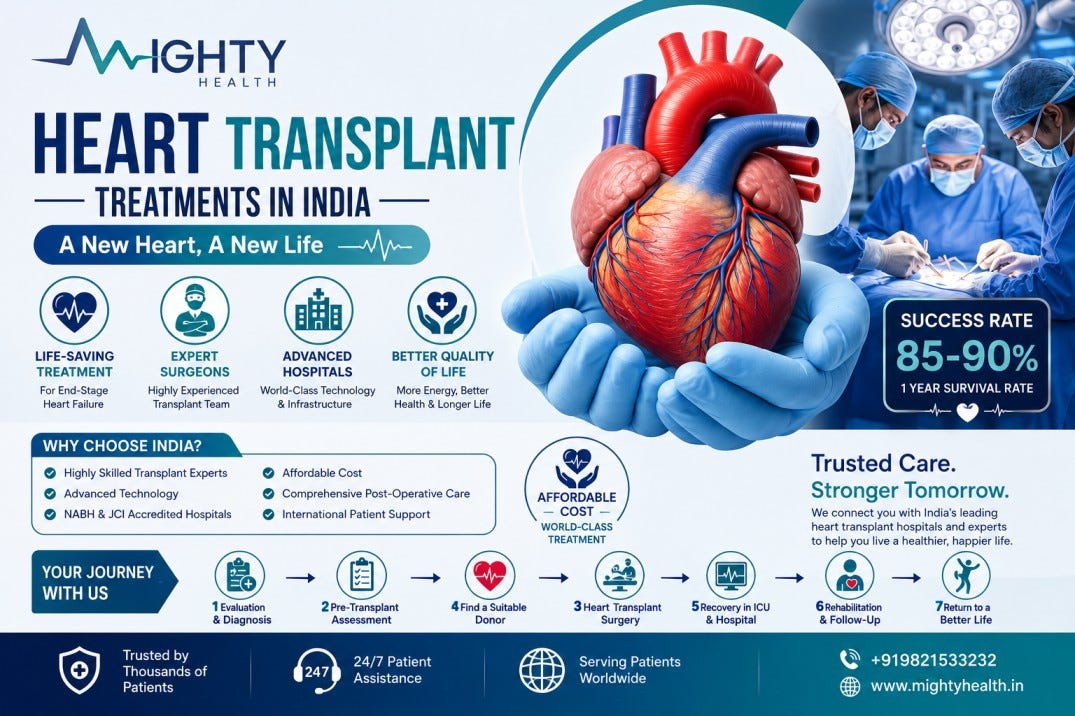
Patients from India and around the world choose India for heart transplantation because of its excellent success rates, comprehensive post-operative care, and significantly lower costs compared to many Western countries.
If you or your loved one has been diagnosed with advanced heart failure, understanding the heart transplant process can help you make informed decisions about treatment.
What is a Heart Transplant?
A heart transplant is a surgical procedure in which a severely diseased or failing heart is replaced with a healthy donor heart obtained from a brain-dead donor whose family has consented to organ donation.
Heart transplantation is usually considered the last treatment option after all other therapies have failed to improve heart function.
The procedure has helped thousands of patients regain their quality of life and significantly extend their lifespan.
Who Needs a Heart Transplant?
Doctors recommend heart transplantation for patients suffering from severe heart conditions such as:
- End-stage heart failure
- Dilated cardiomyopathy
- Ischemic cardiomyopathy
- Congenital heart defects
- Restrictive cardiomyopathy
- Severe coronary artery disease
- Advanced valvular heart disease
- Recurrent life-threatening arrhythmias
- Failed previous heart surgery
- Irreversible heart muscle damage
Symptoms That May Indicate Advanced Heart Failure
Patients may experience:
- Persistent shortness of breath
- Swelling in legs and ankles
- Severe fatigue
- Chest pain
- Difficulty performing daily activities
- Irregular heartbeat
- Dizziness
- Frequent hospitalizations
- Persistent cough
- Fluid retention
If these symptoms continue despite medication, a heart transplant evaluation may be recommended.
Causes of End-Stage Heart Failure
Several medical conditions can eventually lead to heart transplantation, including:
- Coronary artery disease
- High blood pressure
- Cardiomyopathy
- Viral heart infections
- Congenital heart disease
- Heart valve disorders
- Previous heart attacks
- Genetic heart diseases
Heart Transplant Evaluation Process
Before surgery, doctors conduct an extensive evaluation that includes:
Medical History
A complete review of previous illnesses, medications, surgeries, and family history.
Physical Examination
Assessment of overall health and heart function.
Blood Tests
To determine compatibility and detect infections.
Imaging Tests
- Echocardiogram
- Chest X-ray
- CT Scan
- MRI
- Coronary angiography
Organ Function Tests
Evaluation of:
- Liver
- Kidneys
- Lungs
- Immune system
Psychological Assessment
Patients are evaluated to ensure they can follow lifelong post-transplant care.
Heart Transplant Waiting List
After evaluation, eligible patients are placed on the national organ waiting list.
The waiting period depends on:
- Blood group
- Body size
- Medical urgency
- Availability of donor organs
- Geographic location
How is Heart Transplant Surgery Performed?
The procedure generally follows these steps:
Step 1
The patient receives general anesthesia.
Step 2
The surgeon opens the chest through the breastbone.
Step 3
The patient is connected to a heart-lung bypass machine.
Step 4
The diseased heart is removed while preserving major blood vessels.
Step 5
The donor heart is carefully attached.
Step 6
Blood circulation is restored.
Step 7
The heart begins beating normally.
Step 8
The chest is closed after ensuring stable heart function.
The surgery usually lasts between 4 to 8 hours.
Recovery After Heart Transplant
Recovery typically involves:
ICU Stay
7–10 days
Hospital Stay
2–4 weeks
Rehabilitation
Several months
Complete Recovery
Usually within 6–12 months depending on the patient’s condition.
Medications After Heart Transplant
Patients need lifelong medications including:
- Immunosuppressants
- Antibiotics
- Blood pressure medicines
- Cholesterol medications
- Anti-rejection medicines
- Antifungal medications
- Vitamin supplements
Regular follow-up appointments are essential.
Lifestyle Changes After Heart Transplant
Patients should:
- Eat a heart-healthy diet
- Exercise regularly
- Avoid smoking
- Limit alcohol
- Maintain healthy weight
- Monitor blood pressure
- Avoid infections
- Take medicines exactly as prescribed
- Attend regular medical checkups
Benefits of Heart Transplant
Major benefits include:
- Improved quality of life
- Better breathing
- Increased energy
- Reduced hospital admissions
- Improved exercise tolerance
- Longer life expectancy
- Better emotional well-being
- Ability to return to work
- Improved daily activities
Risks and Complications
Although highly successful, heart transplantation may involve:
- Organ rejection
- Infection
- Bleeding
- Blood clots
- Kidney problems
- Side effects of medications
- High blood pressure
- Diabetes
- Cancer risk due to long-term immunosuppression
Regular monitoring helps detect complications early.
Success Rate of Heart Transplant in India
Leading Indian hospitals report excellent outcomes due to experienced transplant teams and advanced post-operative care.
Approximate survival rates are:
- One-year survival: 85–90%
- Five-year survival: 70–80%
- Many patients live 15–20 years or longer with proper care.
Individual outcomes vary based on age, overall health, donor compatibility, and adherence to treatment.
Cost of Heart Transplant in India
The total cost depends on:
- Hospital
- City
- Donor availability
- ICU stay
- Surgeon fees
- Diagnostic tests
- Medications
- Follow-up care
International patients often choose India because treatment costs are considerably lower than in countries such as the United States or the United Kingdom while maintaining high standards of care.
Why Choose India for Heart Transplant?
India offers several advantages:
- Highly experienced cardiac transplant surgeons
- Modern transplant centers
- Advanced surgical technology
- NABH and JCI-accredited hospitals
- Affordable treatment costs
- Comprehensive rehabilitation
- International patient assistance
- Shorter waiting times in some cases
- Multilingual support
- Excellent post-operative care
How MightyHealth Can Help
MightyHealth helps patients connect with some of India’s leading heart transplant hospitals and experienced cardiac specialists. The platform supports patients throughout their treatment journey by helping them compare hospitals, understand treatment options, schedule consultations, arrange travel assistance for international patients, and coordinate follow-up care.
Preparing for Heart Transplant Surgery
Before surgery:
- Stop smoking
- Follow your doctor’s diet plan
- Stay physically active as advised
- Keep all medical records ready
- Arrange family support
- Take prescribed medications regularly
- Attend all evaluations
- Maintain good oral hygiene
- Stay up to date with recommended vaccinations
Life After Heart Transplant
Most patients return to normal activities within several months.
Many individuals can:
- Resume work
- Travel
- Exercise moderately
- Spend quality time with family
- Participate in hobbies
- Enjoy a significantly improved quality of life
Lifelong medical follow-up remains essential to ensure the transplanted heart continues to function well.
Frequently Asked Questions (FAQs)
1. What is a heart transplant?
A heart transplant is the replacement of a diseased heart with a healthy donor heart.
2. Who qualifies for a heart transplant?
Patients with end-stage heart failure who no longer respond to medications or other treatments may qualify after a detailed evaluation.
3. How long does heart transplant surgery take?
Most procedures take between 4 and 8 hours.
4. How long will I stay in the hospital?
Hospitalization typically lasts 2 to 4 weeks, depending on recovery.
5. Is heart transplantation safe?
It is a well-established procedure with good outcomes when performed at experienced transplant centers.
6. What is the success rate in India?
Many leading centers report one-year survival rates of approximately 85–90%.
7. How long does a transplanted heart last?
Many transplanted hearts function well for 15 years or more with proper care and medication.
8. Will I need medicines for life?
Yes. Lifelong immunosuppressive medications are necessary to reduce the risk of organ rejection.
9. Can the body reject the new heart?
Yes. Rejection is possible, but regular monitoring and medications help manage this risk.
10. Can I exercise after surgery?
Yes. Cardiac rehabilitation and regular physical activity are encouraged under medical supervision.
11. Is India a good destination for heart transplant treatment?
Yes. India is recognized for experienced specialists, advanced hospitals, and cost-effective treatment.
12. Can international patients undergo heart transplant in India?
Eligibility depends on Indian laws, organ allocation policies, and individual medical circumstances. International patients should consult their chosen hospital regarding current regulations and requirements.
Conclusion
A heart transplant offers a second chance at life for patients with advanced heart failure. With world-class cardiac centers, skilled transplant surgeons, advanced medical infrastructure, and affordable care, India has become one of the leading destinations for heart transplant treatments.
If you are exploring treatment options, consulting an experienced transplant team and choosing a trusted healthcare partner such as MightyHealth can help you navigate the evaluation, surgery, recovery, and long-term follow-up process with greater confidence.
- Like
- Reply
-
Share




About Us · User Accounts and Benefits · Privacy Policy · Management Center · FAQs
© 2026 MolecularCloud