The Complete Guide to Transportation for Umrah Pilgrims in Saudi Arabia

Performing Umrah is a deeply spiritual journey, but navigating transportation in a new country can sometimes feel overwhelming—especially for first-time visitors. From arriving at the airport and reaching your hotel to traveling between the holy cities of Makkah and Madinah or visiting historical Islamic sites, understanding your transportation options can help make your pilgrimage smoother and more comfortable.
Saudi Arabia has invested heavily in modern transportation infrastructure, making it easier than ever for pilgrims to move between cities and important religious destinations. Whether you prefer high-speed trains, buses, private taxis, ride-hailing apps, or organized tours, there are transportation options available to suit every budget and travel style.
This guide explains everything Umrah pilgrims need to know about getting around Saudi Arabia, including airport transfers, intercity travel, local transportation, ziyarat tours, and practical travel tips.
Why Transportation Planning Matters During Umrah
Many pilgrims spend months preparing for Umrah by arranging visas, flights, and accommodation. However, transportation is often overlooked until arrival.
A well-planned transportation strategy can help you:
Save valuable time during your trip.
Avoid unnecessary stress and confusion.
Travel comfortably between cities.
Visit important Islamic landmarks efficiently.
Reduce transportation costs.
Focus more on worship and less on logistics.
Whether you are traveling alone, with family, or in a larger group, understanding your transportation options before arriving can significantly improve your overall Umrah experience.
Major Cities and Destinations Visited by Umrah Pilgrims
Most Umrah journeys involve travel between several key destinations.
Makkah
Makkah is the primary destination for Umrah pilgrims and home to Masjid al-Haram and the Holy Kaaba. Most visitors spend several days here performing Umrah and engaging in worship.
Madinah
Many pilgrims visit Madinah before or after Umrah to pray in Al-Masjid an-Nabawi and visit important Islamic landmarks associated with the life of Prophet Muhammad ﷺ.
Jeddah
Jeddah serves as the main international gateway for pilgrims arriving by air. Most international travelers land at King Abdulaziz International Airport before continuing to Makkah or Madinah.
Taif
Taif is increasingly popular among pilgrims interested in Islamic history, mountain scenery, and cultural attractions. Visitors often explore sites associated with the Prophet's journey to Taif as well as historical locations connected to his early life.
Transportation Options Available to Umrah Pilgrims
Saudi Arabia offers a variety of transportation methods suitable for different budgets and travel preferences.
High-Speed Rail
The Haramain High-Speed Railway is one of the fastest and most convenient ways to travel between major cities.
The railway connects:
Makkah
Madinah
Jeddah
King Abdulaziz International Airport
Benefits include:
Fast travel times
Comfortable seating
Modern facilities
Reliable schedules
For many pilgrims, the Haramain Train is the most efficient option when traveling between Makkah and Madinah.
Intercity Buses
Intercity buses provide an affordable alternative for travelers on a budget. Bus services connect major cities throughout Saudi Arabia and are generally comfortable and reliable.
Advantages include:
Lower cost than private transportation
Multiple daily departures
Access to many destinations
However, journeys may take longer compared to train travel.
Ride-Hailing Apps
Popular ride-hailing services operate throughout Saudi Arabia and can be useful for local transportation within cities.
These services are often suitable for:
Hotel transfers
Shopping trips
Restaurant visits
Short-distance travel
Pricing varies depending on demand and distance.
Private Transportation
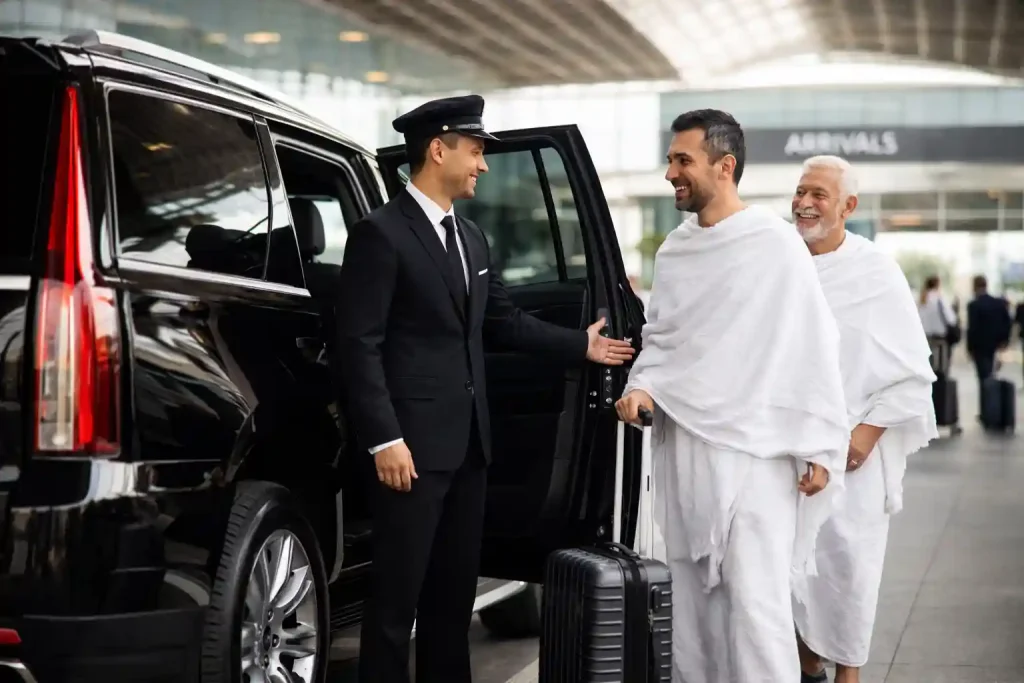
Many pilgrims prefer private transportation because it offers flexibility, privacy, and direct service without waiting for schedules.
Private transportation is especially useful for:
Families
Elderly pilgrims
Large groups
Airport transfers
Ziyarat tours
Intercity travel
Services such as The Umrah Taxi provide pre-arranged transportation between airports, hotels, holy cities, and historical attractions, helping pilgrims travel comfortably while maintaining flexibility in their schedule.
Airport Transportation Guide
Arriving at Jeddah Airport
King Abdulaziz International Airport in Jeddah is the main arrival point for most Umrah pilgrims.
After landing, travelers typically choose one of the following options:
Haramain High-Speed Train
Private taxi
Ride-hailing app
Hotel-arranged transfer
Private transportation service
When selecting airport transportation, consider:
Luggage requirements
Group size
Travel budget
Arrival time
Hotel location
Pre-booking transportation is often recommended, particularly during busy Umrah seasons.
Traveling Between Makkah and Madinah
One of the most common journeys undertaken by Umrah pilgrims is the trip between Makkah and Madinah. These two holy cities are approximately 450 kilometers apart, and several transportation options are available depending on your budget, schedule, and comfort preferences.
Haramain High-Speed Train
The Haramain High-Speed Railway is widely regarded as the fastest way to travel between Makkah and Madinah. Modern trains can complete the journey in approximately two to three hours while offering comfortable seating, air-conditioned cabins, luggage storage, and onboard facilities.
The train is an excellent choice for pilgrims who want a quick and convenient travel experience without the fatigue of a long road journey.
Private Transportation
Many families and groups prefer private transportation because it offers greater flexibility and convenience. Private vehicles allow travelers to choose their departure times, make rest stops when needed, and travel directly between hotels without transferring luggage multiple times.
Private transportation is particularly beneficial for:
Elderly pilgrims
Families with children
Travelers carrying significant luggage
Groups traveling together
Pilgrims with tight schedules
Bus Travel
Intercity buses remain one of the most affordable transportation options. Although travel times are longer than the train, buses provide a practical solution for budget-conscious travelers.
Before booking, compare schedules, travel times, and luggage policies to select the option that best suits your needs.
Transportation for Ziyarat Tours
For many pilgrims, Umrah extends beyond the rituals performed in Makkah. Visiting important Islamic landmarks, known as Ziyarat, allows travelers to deepen their understanding of Islamic history and strengthen their connection to significant events and personalities from the Prophet's life.
Ziyarat in Makkah
Popular sites include:
Jabal al-Nour
Cave of Hira
Jabal Thawr
Jannat al-Mualla
Masjid al-Jinn
Historic locations associated with early Islam
Ziyarat in Madinah
Madinah is home to some of the most visited Islamic landmarks, including:
Masjid Quba
Masjid Qiblatain
Jannat al-Baqi
Mount Uhud
The Seven Mosques
Ziyarat in Taif
Taif offers a unique historical perspective and is often included in extended pilgrimage itineraries. Visitors commonly explore:
Halima Saadia Village (Bani Saad)
Masjid Addas
Historical sites connected to the Prophet's visit to Taif
Al Hada Mountains
Al Shafa Mountains
Since many ziyarat sites are spread across different areas, private transportation often provides the most practical way to visit multiple locations efficiently in a single day.
Transportation Tips for Families, Elderly Pilgrims, and Groups
Choosing the right transportation becomes even more important when traveling with family members, elderly relatives, or larger groups.
For Families
Families traveling with children should consider:
Vehicles with sufficient luggage space
Child seating requirements
Flexible departure schedules
Direct transportation to hotels
Avoid overly complicated routes that require multiple transfers, especially after long international flights.
For Elderly Pilgrims
Older travelers often benefit from transportation options that minimize walking distances and waiting times.
Helpful considerations include:
Door-to-door transportation
Comfortable seating
Assistance with luggage
Frequent rest breaks during long journeys
Reducing physical strain can make the pilgrimage significantly more comfortable.
For Groups
Groups should coordinate transportation in advance whenever possible.
Benefits of pre-arranged group transportation include:
Lower per-person costs
Easier logistics
Consistent arrival times
Better luggage management
Many transportation providers offer larger vehicles specifically designed for groups and extended families.
Common Transportation Mistakes to Avoid During Umrah
Even experienced travelers occasionally encounter transportation challenges. Avoiding these common mistakes can save time and reduce stress.
Waiting Until Arrival to Arrange Transportation
During busy Umrah seasons, transportation demand can increase significantly. Booking in advance helps ensure availability and often provides more pricing options.
Underestimating Travel Times
Traffic conditions can vary, particularly around Makkah during peak prayer times and busy pilgrimage periods. Always allow extra time when planning transfers, train departures, or airport journeys.
Choosing Transportation Solely Based on Price
The cheapest option is not always the most convenient. Consider factors such as comfort, travel time, luggage requirements, and reliability when making transportation decisions.
Not Confirming Pickup Locations
Misunderstandings regarding pickup points are a common source of delays. Confirm addresses, landmarks, terminal numbers, and meeting locations before your journey.
Ignoring Seasonal Crowds
Ramadan, school holidays, and peak Umrah seasons often result in increased demand for transportation services. Planning ahead becomes particularly important during these periods.
Safety Tips for Umrah Travelers
Transportation safety should remain a priority throughout your journey.
Some useful recommendations include:
Keep important travel documents secure.
Save hotel addresses on your phone.
Carry emergency contact information.
Use licensed transportation providers.
Confirm fares or booking details in advance.
Stay hydrated during long journeys.
Allow additional travel time during busy periods.
A little preparation can prevent many common travel problems and help ensure a more enjoyable pilgrimage experience.
- Like
- Reply
-
Share




About Us · User Accounts and Benefits · Privacy Policy · Management Center · FAQs
© 2026 MolecularCloud