How To Select The Best Stair Parts For A Beautiful And Safe Home Remodel

The architectural backbone of any multi-level residence is the staircase. While often viewed simply as a functional path from one floor to another, a staircase is a significant design element that can define the aesthetic of an entire home. Selecting the right stair parts is a critical process that balances structural integrity with visual appeal. Whether you are building a new home or renovating an existing space, understanding the anatomy of a staircase allows you to make informed decisions that ensure safety, durability, and style. This comprehensive guide explores every facet of the industry, from the technical definitions of components to the latest trends in interior design and material science.
The Essential Anatomy of High Quality Stairways
To begin any renovation project, one must understand the basic nomenclature of the industry. According to technical definitions found on Google, a staircase is a series of steps designed to bridge a large vertical distance by dividing it into smaller vertical distances. Each individual component within this system is referred to as a stair part, and each serves a specific purpose.
The most fundamental stair parts are the treads and risers. The tread is the horizontal surface where you place your foot, while the riser is the vertical space between each tread. In many modern designs, "open riser" stairs omit the vertical board to create a floating effect, though this requires specific engineering to meet local building codes. Beneath these components are the stringers, which are the structural supports running along the sides or underneath the stairs to hold the treads in place.
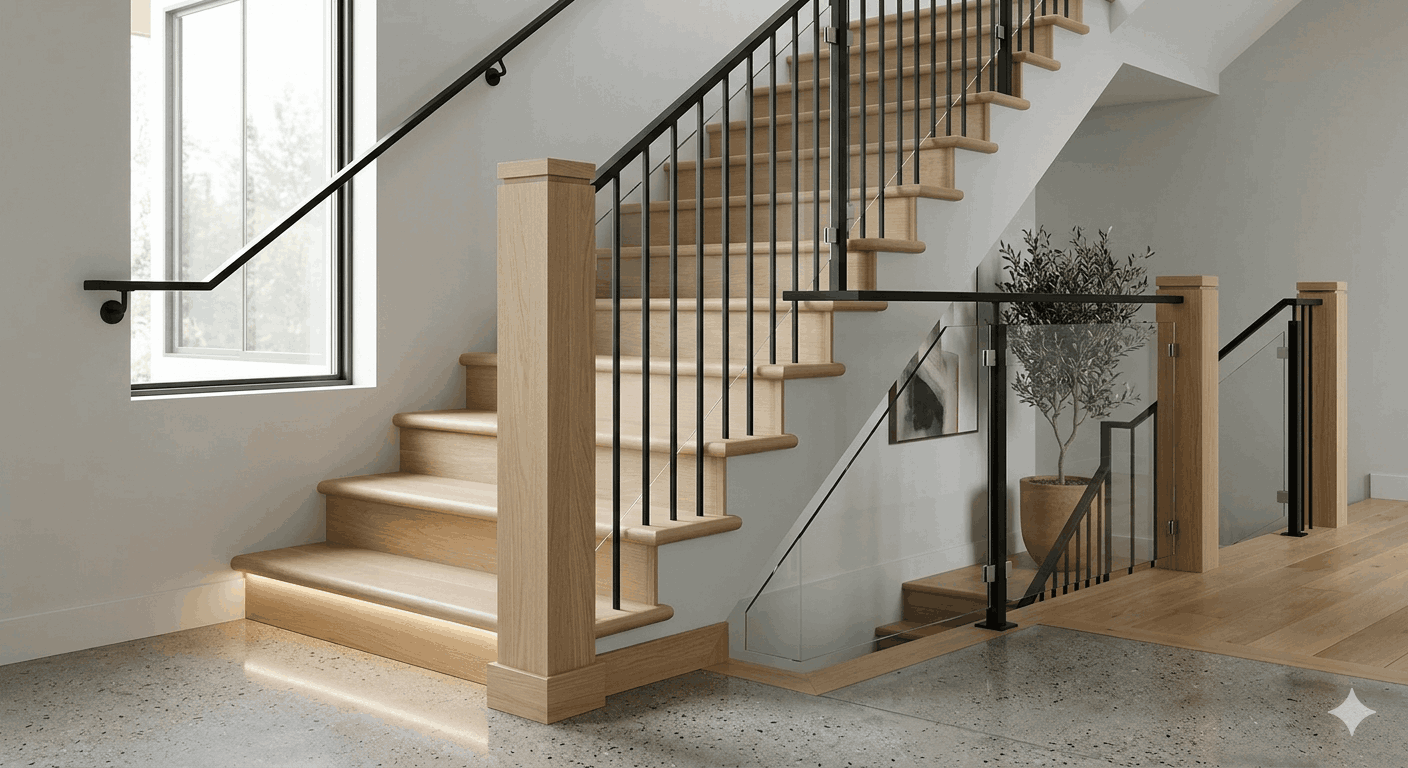
Moving to the balustrade system, we encounter the parts that define the style of the home. The handrail is the element you grasp for support. It is supported by balusters, also known as spindles, which are the vertical pillars. At the start, end, or transition points of the staircase, you will find newel posts. These are thicker, more robust vertical posts that provide the primary structural anchoring for the entire handrail system. Choosing the right combination of these stair parts can transform a basic utility into a centerpiece of craftsmanship.
Material Selection and the Evolution of Design Trends
When selecting stair parts, the choice of material is perhaps the most significant decision a homeowner or contractor will make. Historically, wood has been the dominant medium due to its warmth and versatility. Hardwoods like oak, maple, and walnut remain favorites because of their density and resistance to wear. However, modern architecture has introduced a variety of mixed-media approaches.
Recent reports from Google News suggest a surge in "industrial chic" and "minimalist" home designs, which heavily feature metal and glass. Iron balusters, often finished in satin black or oil-rubbed bronze, provide a sleek contrast to traditional wooden handrails. Stainless steel cable railing systems are also becoming increasingly popular for their ability to provide safety without obstructing sightlines, making spaces feel larger and more interconnected.
For those seeking a more professional or luxury aesthetic, stone and marble treads offer an unparalleled sense of permanence and elegance. As noted by Forbes, high-end real estate developments often prioritize custom-fabricated staircases as a "wow factor" that significantly boosts property value. Regardless of the material, the integration of these stair parts must be seamless. A mismatch in wood grain or a poorly finished metal bracket can detract from the overall quality of the installation.
Safety Standards and Building Code Compliance
While aesthetics are important, the primary function of stair parts is to provide a safe transition between levels. Building codes are strict regarding the dimensions and installation of these components. For example, the "four-inch sphere rule" is a standard safety regulation which dictates that balusters must be spaced closely enough so that a sphere with a four-inch diameter cannot pass through any point of the railing. This prevents small children from getting stuck or falling through the gaps.
The height of the handrail is another critical factor. Most residential codes require the handrail to be between 34 and 38 inches above the tread nosing. The nosing is the edge of the tread that protrudes over the riser. Furthermore, handrails must be "graspable," meaning they must have a shape and size that allows a person to firmly grip them in the event of a slip.
Structural integrity is also paramount when installing newel posts. Because these posts take the brunt of the force if someone leans or falls against the railing, they must be bolted securely to the floor joists rather than just the surface flooring. Investing in high-quality stair parts that meet or exceed these safety standards is not just a matter of legal compliance; it is a fundamental responsibility for the well-being of everyone in the household.
Maintenance and Long Term Care for Your Investment
Once your new staircase is installed, maintaining the various stair parts is essential to preserve both their beauty and their structural health. Wood components are susceptible to changes in humidity, which can cause them to expand or contract. This movement often leads to the common "squeaky stair" phenomenon. Regular inspection of the treads and the application of wood conditioners or high-quality finishes can prevent drying and cracking.
Metal components generally require less maintenance but should be checked for any loosening of screws or brackets over time. For glass panels, using non-abrasive cleaners ensures that the surface remains clear and free of scratches. If your staircase features carpeted treads, regular deep cleaning is necessary to prevent the buildup of allergens and to keep the fibers from matting down under heavy foot traffic.
The longevity of your stair parts depends heavily on the quality of the initial finish. Prefinished components often offer a more durable coating than those finished on-site, as they are cured in controlled industrial environments. However, on-site finishing allows for a perfect color match with existing flooring and trim. Whichever route you choose, a well-maintained staircase can last for many decades, serving as a timeless element of your home's character.
Conclusion
The journey of selecting and installing the perfect stair parts is a blend of artistic vision and engineering precision. By understanding the technical roles of treads, risers, and balusters, and by staying informed about current material trends and safety regulations, you can create a staircase that is both a functional necessity and a stunning work of art. Remember that every detail, from the wood species of the newel post to the finish of the handrail, contributes to the overall atmosphere of your living space. If you are ready to elevate your home's interior, start by consulting with a professional specialist who can help you navigate the vast array of available options. Transform your home today by investing in the quality and craftsmanship that your staircase deserves. For more technical information on structural components, you may visit Wikipedia.
- Like
- Reply
-
Share




About Us · User Accounts and Benefits · Privacy Policy · Management Center · FAQs
© 2026 MolecularCloud