gRNA and WT SpCas9 co-expression plasmid: pLentiCRISPR v2 ATP5J
pLentiCRISPR v2 ATP5J
Cat. No.:
MC_0052059
Availability:
4 µg of lyophilized plasmid
(1 µg for low-copy plasmid)
(1 µg for low-copy plasmid)
Price:
$99
| Keywords | CRISPR |
| Gene Targeted | ATP5J |
| Gene Target Sequence | GACGGCTGACCGAATGACAG |
| Species | H. sapiens (human) |
| Description | The following gRNA sequence is designed by Feng Zhang’s laboratory at the Broad institute to uniquely target the indicated gene within the human genome. The gRNA sequence is for use with WT SpCas9, or as crRNA for use with WT SpCas9 protein, to introduce a DSB for genome editing. The sgRNA sequence was validated by Feng Zhang’s research. |
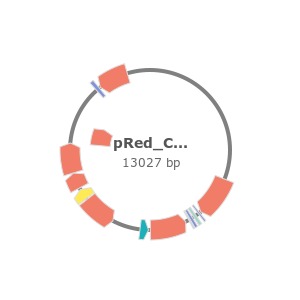
| Vector Backbone | pLentiCRISPR v2 |
| Selectable Marker | Puromycin |
| Reference | Sanjana N.E., Shalem O., Zhang F. Improved vectors and genome-wide libraries for CRISPR screening. Nat Methods (2014) 11(8): 783-4. |
| Plasmid Copy | High Copy |
| Bacterial Resistance | Ampicillin |
| Growth Strain | Stbl3 |
| Growth Temperature | 37°C |
| Plasmid Size (bp) | 13013 |
| Gene/Insert Name | ATP5J |
| Gene/Insert Sequence |
GACGGCTGACCGAATGACAG |
Customers who viewed this item also viewed:
CRISPR
Composite tag for in vivo biotinylation, TEV protease cleavage, and 6xHis tagging